
Our smallest team members
Our bees
The Iberian black bee, at home in Catalonia.
We deliberately work with bees native to the region and care for our colonies attentively, choosing natural habitats and careful husbandry.
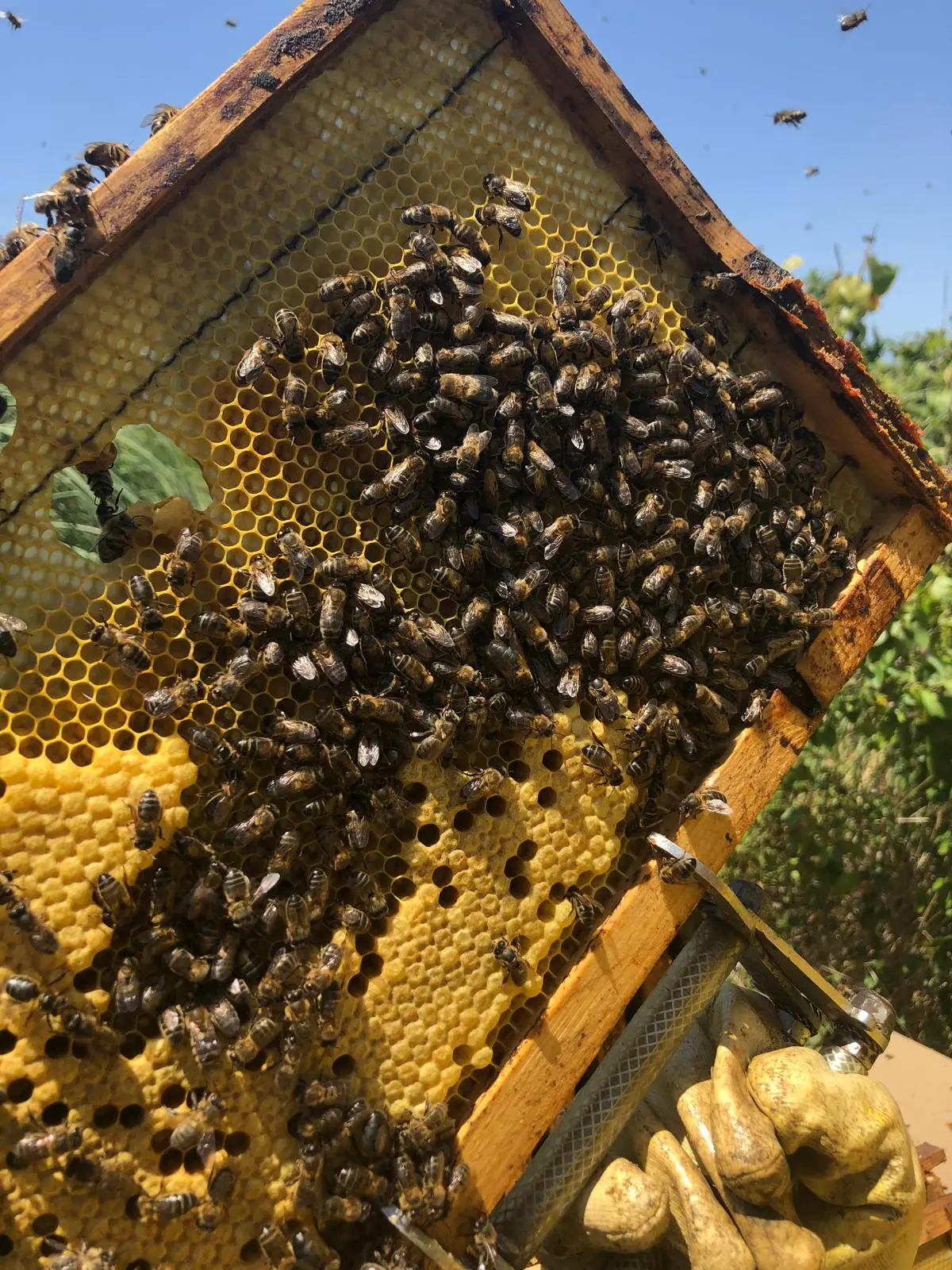
A bee with local roots
We work with the Iberian black bee. It is part of the region's beekeeping tradition and adapted to local conditions. That suits a kind of beekeeping guided by nature rather than demanding maximum yield from it.
A diverse habitat is essential
Many of our apiaries are in natural areas of Catalonia, including protected areas and organic farms. There the bees find different flowers in each season — important, because colonies need pollen and nectar over long periods.
Through pollination, bees help many wild and cultivated plants reproduce. Whole communities benefit: plants, other insects, birds, wildlife and, not least, people.
What bee colonies struggle with
Bees face a range of challenges: parasites, natural enemies and changes to their habitat. That is why attention and expert care matter so much.
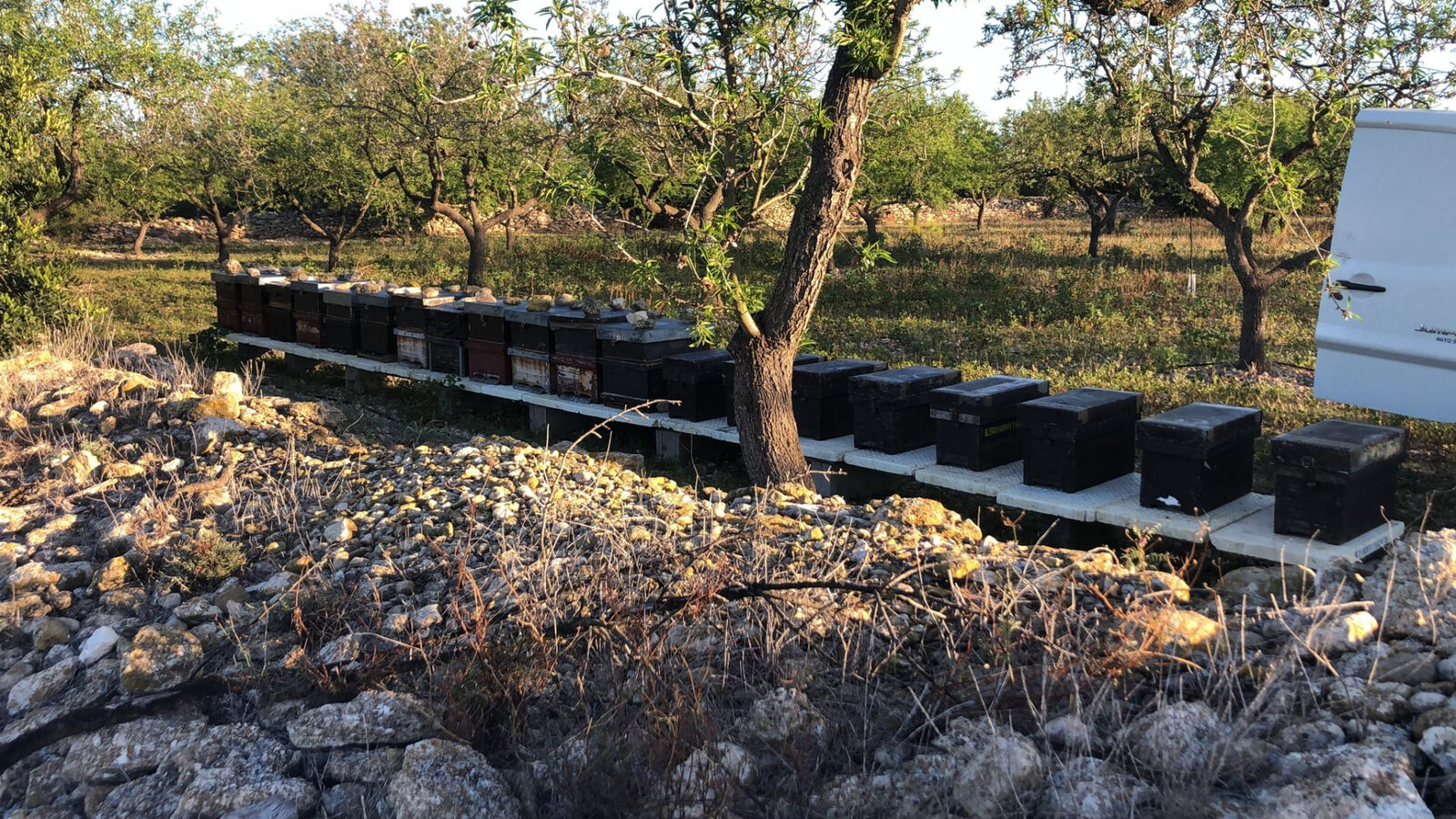
Honey bees and wild bees: both matter
Honey bees live in large colonies cared for by beekeepers. There are also many wild bee species with very different lifestyles. Protecting a diverse natural world benefits far more than just our honey bees.
Responsibility starts at the hive.
Find out who is behind the beekeeping and how we live this responsibility every day.